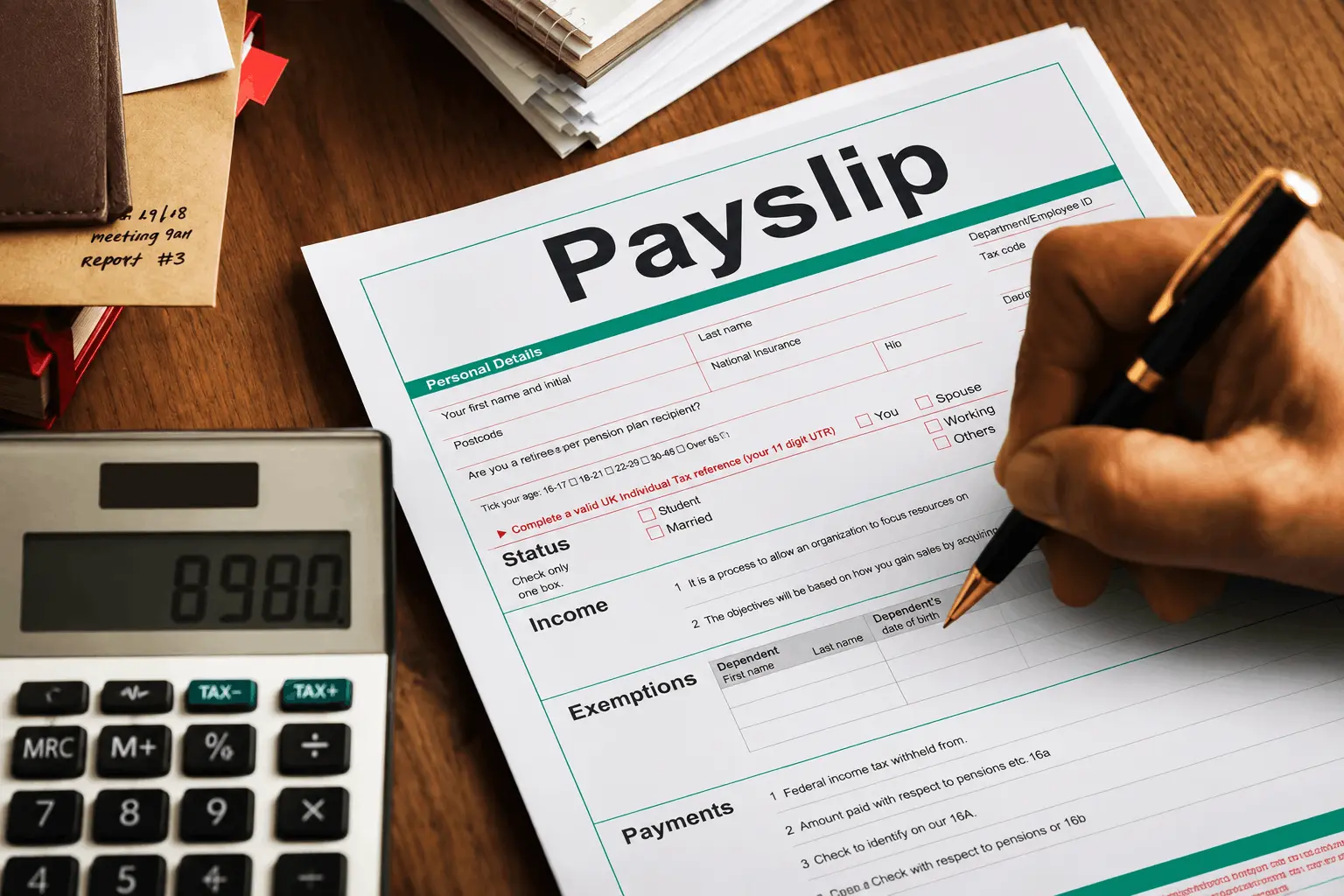
An employee payslip is more than a document showing how much an employee was paid.
It is the record that connects the employee’s agreed compensation with the actual payment made during a payroll period. When the numbers are questioned, the payslip should help explain where the final amount came from.
For employers in Indonesia, this matters because wage payments are subject to specific requirements. Under PP No. 36 Tahun 2021 on Wages, as amended by subsequent regulations, employers are required to provide proof of wage payment containing details of the wages received by the worker when the wages are paid. The regulation remains in force with amendments, including the latest amendment through PP No. 49 Tahun 2025. JDIH Kementerian Ketenagakerjaan
That makes the employee payslip part of payroll administration, not simply an HR document.
Employee Payslip Indonesia Is a Record of the Actual Payroll
A payslip should allow an employee to understand the relationship between their employment terms, the compensation earned during the period, deductions, and the final amount paid.
It should therefore be generated from the approved payroll rather than prepared separately.
A useful payroll chain looks like this:
Employment terms → payroll calculation → deductions → approval → salary payment → employee payslip
If those records do not agree, the company has a reconciliation problem.
This is why payslip generation belongs inside the wider Payroll Process Indonesia rather than being treated as the final formatting step.
Employee Payslip Indonesia Should Explain the Net Salary
The most important number for an employee is often the net salary.
But a net amount by itself does not explain anything.
A useful payslip should show enough information for the employee to understand how the final payment was reached.
For example:
Gross earnings
− Employee deductions
= Net pay
The exact components depend on the employee’s compensation structure and applicable deductions.
What Should an Indonesian Employee Payslip Show?
There is no single universal visual template that every company must use.
However, the document should contain sufficient detail to serve as proof of the wage payment and explain the amount received.
Common information includes:
- Employer name
- Employee name
- Employee identification or payroll number
- Payroll period
- Payment date
- Basic salary
- Fixed allowances
- Variable compensation
- Overtime, where applicable
- Other earnings
- Employee tax deductions
- BPJS or other applicable deductions
- Other authorised deductions
- Net salary
The official Ministry of Manpower regulation on wages confirms the underlying requirement for employers to provide proof of wage payment containing details of the wages received by workers. JDIH Kementerian Ketenagakerjaan
The important principle is not the visual design.
It is whether the payslip gives a reliable record of what was paid.
Gross Pay Should Be Traceable to Payroll
The gross amount shown on the payslip should come from the approved payroll calculation.
Depending on the employee’s arrangement, gross earnings may include:
- Basic salary
- Fixed allowances
- Non-fixed allowances
- Overtime
- Bonuses
- Incentives
- Other employment-related payments
The employer should be able to trace unusual or variable amounts back to the relevant payroll records.
For example, if an employee receives a significantly higher gross salary because of a performance bonus, the payroll records should contain the supporting information for that payment.
This is where a payslip connects with the Payroll Checklist Indonesia.
The checklist verifies the payroll before payment; the payslip records the result.
Deductions Need to Be Understandable
Employees do not only need to know how much they earned.
They also need to understand why the amount transferred to their bank account is lower than their gross earnings.
Depending on the employee and payroll arrangement, deductions can include:
- PPh 21
- Employee BPJS contributions
- Other authorised payroll deductions
Deductions should not appear as unexplained reductions.
For PPh 21, employers should ensure that the payroll deduction corresponds with the applicable tax calculation. The Directorate General of Taxes’ official PPh 21/26 guidance explains the employer’s withholding responsibilities for employment-related income. Pajak
A payslip therefore becomes more useful when the deduction labels are clear enough for the employee to distinguish tax, social security, and other deductions.
Employee Payslip Indonesia Should Separate Earnings From Deductions
A practical payslip should make the difference between earnings and deductions immediately visible.
For example:
| Payroll component | Amount |
|---|---|
| Basic salary | XXX |
| Allowances | XXX |
| Overtime / incentive | XXX |
| Gross earnings | XXX |
| PPh 21 | -XXX |
| Employee BPJS | -XXX |
| Other authorised deductions | -XXX |
| Net salary | XXX |
The actual components will vary between employees.
The purpose of the structure is to make the calculation understandable.
Payroll Tax and Payslips Should Tell the Same Story
The payslip and payroll tax records should not be treated as separate systems.
If the payroll calculation shows one amount of taxable compensation while the tax documentation is based on different information, the company may eventually need to reconcile the discrepancy.
This is particularly important when employees receive:
- Bonuses
- Incentives
- Overtime
- Additional allowances
- Salary adjustments
- Other variable compensation
The current PPh 21 framework also uses the TER mechanism for relevant periods, while the final tax period involves the applicable annual calculation. Employers should therefore ensure that payslip information is generated from the same payroll data used for the tax calculation. Pajak
For a deeper explanation of the tax side, see Payroll Tax Indonesia.
BPJS Information Should Also Match Payroll
Where employee BPJS contributions are deducted through payroll, the payslip should reflect the applicable employee deductions clearly.
The underlying payroll records should remain consistent with the information used for BPJS administration.
This creates another reconciliation chain:
Employee record → payroll → BPJS calculation → payslip
If an employee asks why a particular deduction appears on the payslip, HR should be able to trace it back to the payroll calculation and the applicable contribution record.
The Payslip Should Match the Amount Actually Paid
One of the simplest payroll controls is also one of the most important:
The net salary on the payslip should match the amount actually transferred to the employee.
Before distributing payslips, payroll should compare:
- Approved payroll
- Bank payment file
- Actual salary payment
- Payslip net amount
A difference should have a documented reason.
For example, if a bank transfer was adjusted because of a payment correction, the payroll records should make that adjustment clear.
A payslip should never be treated as a document that can simply be edited to match an unexplained payment.
When Should the Employee Receive the Payslip?
The payslip should be connected to the wage payment process.
PP No. 36 Tahun 2021 states that the employer must provide proof of wage payment containing details of the wages received when the wages are paid. JDIH Kementerian Ketenagakerjaan
This means companies should build payslip generation into the payroll calendar rather than leaving it as an administrative task for later.
A typical sequence can be:
- Payroll data is collected
- Payroll is calculated
- Payroll is reviewed
- Payroll is approved
- Salary is paid
- Payslips are provided
- Payroll records are closed
This also aligns the payslip with the broader Monthly Payroll Process Indonesia.
Electronic Payslips Can Fit Into a Modern Payroll System
A payslip does not need to be a physical piece of paper to be useful.
Companies may distribute payslips electronically through systems such as:
- Payroll platforms
- Employee portals
- Secure HR systems
- Other controlled digital channels
The important consideration is not whether the payslip is printed.
The company should ensure that the employee can access the document and that payroll records can be maintained appropriately.
Digital delivery can also make it easier for employees to retrieve historical payslips when they need them for administrative or personal purposes.
What Happens When a Payroll Error Is Found?
Payroll errors should not simply be hidden by changing the payslip.
The company should determine:
- What was originally calculated?
- What was actually paid?
- What caused the error?
- Does the correction affect tax or statutory deductions?
- Does the employee need a corrected payslip?
- What supporting record should be retained?
If a corrected payslip is issued, the company should retain sufficient documentation to explain the correction.
This is particularly important when the original payroll has already been approved and paid.
Corrections Should Leave an Audit Trail
A good payroll system should distinguish between:
- Original payroll
- Correction
- Reason for correction
- Approval
- Corrected payroll
- Corrected payslip
The objective is not to make payroll records unnecessarily complicated.
It is to ensure that someone reviewing the payroll later can understand what happened.
Employee Payslip Indonesia Becomes More Important as Payroll Gets Complex
A simple payroll may only contain salary and standard deductions.
A growing company may have:
- Multiple salary structures
- Variable compensation
- Overtime
- Bonuses
- Different employee categories
- Expatriate employees
- Multiple payroll locations
- Different approval levels
The payslip needs to remain understandable even as the payroll itself becomes more complicated.
That does not mean putting every internal payroll calculation on the employee’s payslip.
It means showing the information necessary to explain the employee’s actual payment.
Foreign Companies Need to Design Payslips Into Their Payroll Setup
Foreign companies entering Indonesia sometimes bring payroll formats from their headquarters.
That can create problems when the local payroll process contains Indonesian tax, BPJS, and wage administration requirements that are not represented in the original template.
Before the first employee is paid, the company should determine:
- What information will appear on the payslip?
- Which deductions need to be shown?
- Who generates the payslip?
- Who reviews it?
- How is it delivered?
- Where are historical payslips stored?
- Who handles employee questions?
- How are corrections documented?
These decisions should be made as part of Payroll Setup Indonesia, rather than after payroll has already started.
Expatriate Payslips Need the Same Payroll Discipline
Foreign employees may have more complicated compensation arrangements, but the basic payroll control remains the same.
The payslip should still connect the employee’s compensation with the actual payment.
Where an expatriate receives allowances or other employment-related payments, the company should make sure the payroll treatment is consistent with the applicable tax and employment arrangements.
For companies hiring foreign employees, Payroll for Foreign Employees in Indonesia provides additional context on managing payroll for international employees.
The key point is that expatriate payroll should not become a separate informal process outside the company’s normal payroll controls.
A Payslip Can Become Important When Employees Have Questions
Payroll questions often begin with a simple statement:
“My salary is different this month.”
A clear payslip allows HR to investigate the question systematically.
For example:
Gross salary changed:
Check salary adjustments, bonuses, overtime, or allowances.
Tax deduction changed:
Review the applicable PPh 21 calculation and changes in taxable payroll.
BPJS deduction changed:
Review the underlying contribution and employee payroll information.
Net salary changed:
Compare both earnings and deductions against the previous payroll period.
This is much more effective than asking payroll staff to reconstruct the calculation from memory.
A Practical Employee Payslip Indonesia Quality Check
Before payslips are distributed, employers can perform a short review.
Employee Information
Check:
- Correct employee name
- Correct employee identification
- Correct payroll period
- Correct employer information
Earnings
Check:
- Basic salary
- Allowances
- Overtime
- Bonuses
- Incentives
- Other applicable earnings
Deductions
Check:
- PPh 21
- BPJS deductions
- Other authorised deductions
Final Amount
Check:
- Gross pay
- Total deductions
- Net salary
- Bank payment amount
Documentation
Check:
- Payroll approval completed
- Payment completed
- Payslip generated
- Payroll records retained
This should be a final quality check, not a replacement for the full payroll process.
When Should Payslip Administration Be Outsourced?
Payslip generation is usually one part of a much broader payroll operation.
For a small company with straightforward payroll, internal HR or Finance may be able to manage it.
The administrative burden can increase when the company has:
- A growing workforce
- Multiple compensation structures
- Variable pay
- Expatriate employees
- Frequent payroll changes
- More complex tax administration
- Multiple approval stages
In these situations, payroll outsourcing can consolidate salary calculation, tax administration, BPJS administration, reporting, and payslip generation.
BigFish’s Payroll Indonesia service includes payslip generation as part of its broader payroll administration offering.
The decision should nevertheless be based on the company’s actual payroll complexity and the responsibilities that need to be transferred.
Employee Payslip Indonesia Should Be Part of the Payroll Record
A payslip is most useful when it is connected to the rest of the payroll documentation.
A complete payroll record may include:
- Employee master data
- Employment terms
- Attendance information
- Payroll calculations
- Payroll approvals
- Tax records
- BPJS records
- Salary payment records
- Employee payslips
- Correction records, where applicable
The payslip is therefore not the entire payroll record.
It is the employee-facing document that explains the result of that payroll cycle.
BigFish Global Consulting for Payroll Administration in Indonesia
For companies operating in Indonesia, payroll administration requires more than calculating salary.
Employee data, payroll calculations, PPh 21, BPJS, approvals, salary payments, and payslips need to remain connected throughout every payroll cycle.
BigFish Global Consulting supports local and foreign companies with payroll administration in Indonesia, including salary processing, tax administration, BPJS administration, reporting, and payslip generation.
For companies reviewing the complete payroll workflow, the related Payroll Process Indonesia and Payroll Checklist Indonesia resources can be used alongside this guide.
A good employee payslip should do one thing particularly well: make the employee’s final payment understandable and traceable.